


MEET THE SPEAKER: DEREK A WHIGHAM – VALUE INHIBITORS TO VALUE CREATORS: PROVING SECURITY IN AN ERA OF AI AND CONTINUOUS THREATS
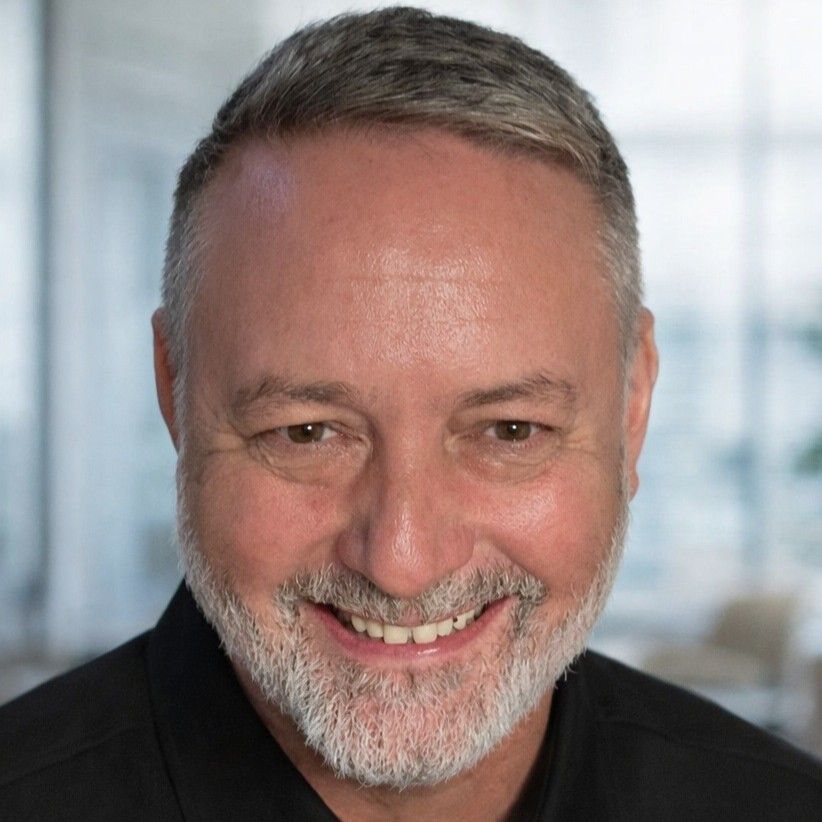
Speaker Name: Derek A Whigham
What's one thing you hope attendees take away from your session?
That a control you haven't tested is an assumption, not a control. Risk, compliance and security teams are often seen as blockers, but the friction usually comes from uncertainty: if you can't prove a control works, the only rational answer is another approval gate. When you continuously validate your defences against real adversary behaviour, you replace assumption with evidence, and you can say yes to the business faster, with proof the board and the regulator can trust.
In one sentence, what do you do and what is your role?
As Senior Advisor to AttackIQ, I help businesses large and small , use continuous, threat-informed validation to prove that their security, fraud and AI controls actually work, drawing on 28 years in cybersecurity, including senior leadership in Lloyds Banking Group's Chief Security Office.
What's the biggest challenge facing the industry in this area?
The gap between assumed and proven control effectiveness. Financial services has invested heavily in controls and very little in proving they work. Meanwhile, weekly release cycles, rapid AI adoption and the convergence of cyber attacks and fraud mean a point-in-time audit tells you very little about today. Regulators, through DORA and the operational resilience regime, increasingly want evidence rather than assertion, and most firms aren't yet set up to provide it continuously.
What's one piece of advice you'd give to someone working in fintech today?
Treat your controls the way you treat your code: never ship without tests. Start from the threats that actually matter to your business, prove your defences against them continuously, and have the confidence to retire controls that add friction without adding protection. And get your fraud and cyber teams in the same room, because most fraud now starts as a cyber event.
What book, podcast, newsletter, or resource would you recommend to our audience?
MITRE's Center for Threat-Informed Defense. It's free, practical and vendor-neutral. Beyond ATT&CK, its new Fight Fraud Framework (F3) is directly relevant to financial crime teams, and ATLAS covers threats to AI systems. For a book, The Coming Wave by Mustafa Suleyman is a sharp, accessible read on why AI changes the risk landscape for everyone.
What topic will you be speaking about at FinTech Connect 2026?
I'm on the "Value Inhibitors to Value Creators" panel, looking at how risk, compliance and security functions can move from being seen as friction to being genuine enablers of growth. My angle is that continuous control validation turns assurance from a cost into evidence, giving firms the confidence to move faster safely.
Just for fun: if you could have dinner with any person, past or present, who would it be and why?
I genuinely love computers , Alan Turing. He laid the foundations for both modern computing and codebreaking, and he was asking whether machines could think decades before anyone took the question seriously. I'd love to show him where AI has got to, and hear what he'd worry about first.
What industry trend are you watching most closely?
AI agents moving into production. We're shifting from AI that answers questions to AI that takes actions, with access to customer data, systems and potentially payments. That makes every agent a new kind of insider. The question I'm watching is how firms will prove those agents behave safely under attack, not just assert that they do. Also Biocomputing , we think AI is scary !!!
Why is this topic particularly important right now?
Three pressures are landing at once. Regulators expect demonstrable resilience under DORA and the FCA/PRA operational resilience regime, with AI regulation following close behind. Attackers are using AI to move faster and at greater scale, and fraud and cyber attacks are converging. And budgets are tight, so every control has to justify its cost. Proving what works, and cutting what doesn't, is how firms meet all three.
What's one prediction you have for the next 3-5 years?
The line between people and AI will get much closer. Over the next three to five years, AI will move off the screen and onto, and increasingly into, the body: wearables that understand our health and context in real time, bio-links and brain–computer interfaces that help restore movement, sight or speech, and implantable devices that let AI personalise care and everyday life. The upside is enormous, from earlier diagnosis to real independence for people living with disability, and it will change how we prove who we are and how we pay. But once AI is connected to our bodies, security stops being only about data and becomes about safety and trust. Every device, model and link will need to be continuously proven to be secure and behaving as intended, not certified once and assumed. The organisations that earn that trust will be the ones people choose to let in.