Building the Next Generation of Financial Services
2026 Track Narrative
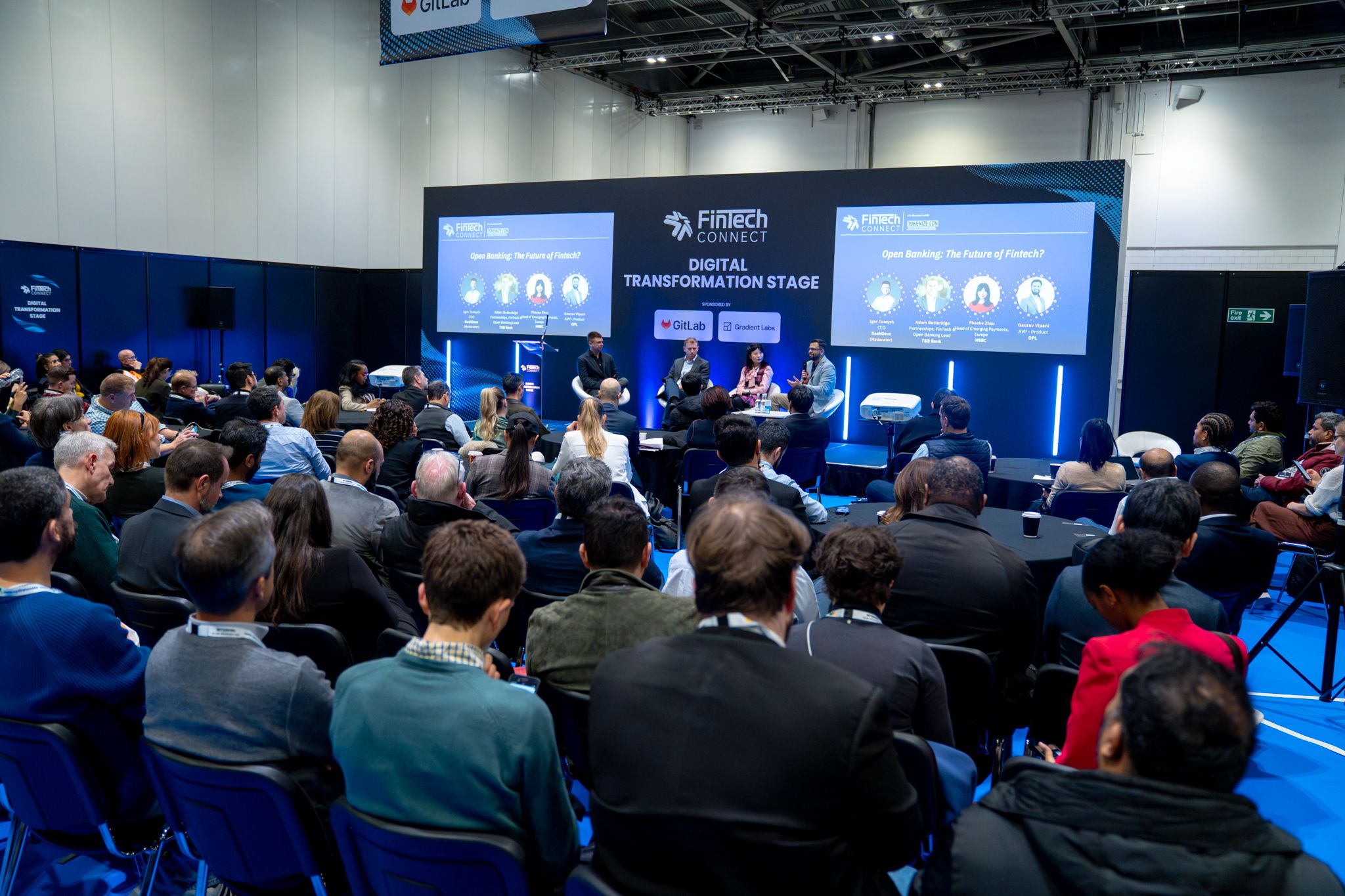
Modern finance is being rebuilt around resilience, third party dependencies, and cross border oversight. This stage is where CIOs, CTOs, architects, and transformation leaders get the playbook for 2027: how to modernise core platforms, cloud operating models, and vendor ecosystems in a world where critical ICT providers are now formally designated and supervised, and where EU-UK cooperation is structured for coordinated oversight during incidents.
Who Attends This Track
Chief Technology Officer
Chief Digital Officer
Chief Information Officer
Head of Engineering
Head of Architecture
Head of Cloud
Head of Platform Engineering
Head of DevOps
Head of Core Banking Transformation
Head of Digital Banking
VP / Director, Technology Strategy
Head of Engineering Productivity
Head of Open Banking Technology
Head of AI Engineering
Key Attendee Benefits
01
Benchmark digital transformation strategy approaches against leading UK and global banks, including Lloyds, Commerzbank, MUFG, NatWest and more
02
Hear honest case studies on core banking modernisation and how change is being implemented across enterprises
03
Get a clearer view of where cloud-native adoption is delivering in regulated environments, and where it is still struggling
04
Explore practical ways to manage tech debt at scale without sacrificing delivery speed
05
Understand what the future of best practice legacy modernisation looks like from a range of stakeholders, including big bank transformation leaders and fintech pioneers
06
Understand how open banking APIs, API design patterns and real-time payment infrastructure are changing financial services architecture
07
Evaluate when AI coding tools can improve engineering performance, and where regulated teams need tighter controls
The skills required to succeed in financial services are changing faster than many organisations can adapt. AI, automation and digital transformation are reshaping roles from the frontline to the boardroom, raising questions about how institutions recruit, retrain and retain talent. Bringing together Claire Tunley, CEO of the Financial Services Skills Commission, and Wincie Wong, Founding Member of Tech She Can, this fireside chat examines where the industry's most pressing skills gaps lie, which human capabilities will become more valuable as technology advances, and how financial institutions can build a workforce prepared for the demands of tomorrow.
Legacy modernisation is no longer just an internal technology challenge. As financial institutions rely on more vendors, platforms and third-party providers, transformation now carries new layers of operational, regulatory and resilience risk. This panel examines how leaders can modernise infrastructure while managing the dependencies that come with it. What legacy paralysis looks like up close: Understanding the dangers of Tech Burden. Balancing modernisation with the drawbacks of greater 'tech debt'. Evolving the playbook rules for a new technology landscape: How AI agents, Blockchain, Open Banking and Data Sharing are all disrupting transformation frameworks.
From miscalibrated risk appetite to control functions that slow the business down, saying no is the easy option - but it isn't the safe one. We are interviewing Nitesh Palana, Chief Risk and Compliance Officer at Moneyfarm to understand how leaders can turn Risk and Compliance into a growth function by matching risk to reward, hiring for agency and ambition, and building controls that scale with the business rather than against it.
Bolting AI onto legacy processes has a ceiling. Beyond a point, complexity grows, costs escalate, and the value of AI begins to diminish. The real opportunity isn’t adding more AI; it’s fundamentally …
To create lasting advantage, financial institutions need metrics that capture adoption, trust, productivity, customer outcomes and human impact. Putting humans in the centre of AI processes is the best way to effectively ensure that those metrics succeed. Backed with academic rigour as well as some interesting case examples, this session plans to equip you with an effective argument for human-centric AI initiatives.
Reinvention inside an established bank is rarely clean or simple. It means modernising technology, reshaping customer journeys and changing internal ways of working while still protecting trust, continuity and regulatory control. Komern' Banka's transformation offers a practical look at how a traditional financial institution can move towards a more digital, responsive and future-ready operating model without losing sight of the customers and systems it already serves.
Legacy modernisation is often presented as a technology upgrade, but in financial services it is a risk, resilience and leadership challenge. The stakes are high: disruption, regulatory scrutiny and customer impact are never far away. This fireside chat explores what good modernisation looks like when failure is not an option.
By 2036, more than nine billion people will live and work alongside AI systems that think, learn and adapt in real time and likely will be outnumbered by AI Agents that act. As AI becomes embedded across the workforce, it will reshape how we learn, work and stay competitive in an AI-powered economy. The challenge becomes whether organisations can equip people with the skills and confidence to thrive through that transformation. AI upskilling has the potential to unlock opportunity and productivity at scale, but without action, it risks widening inequality and leaving millions behind. Together, the panel will draw from business practices from within the financial services industry and Zopa Bank and Clear Score's Jobs2030 Coalition, which actively tackles what it takes to build AI-ready industries at scale: equipping people with the skills, confidence and tools to thrive in an AI-powered economy, while creating a practical model that other sectors can lift, shift and adopt.
As banks become more dependent on cloud providers, software vendors, data partners and specialist fintechs, the digital supply chain has become a core resilience issue. Managing these relationships now requires deeper visibility, stronger controls and clearer accountability. This session explores how institutional banks can govern complex technology ecosystems without slowing transformation.
As financial services organisations move towards more demanding AI applications, the infrastructure behind them becomes increasingly critical. New Telehouse research reveals that just 22% of financial services respondents report the highest level of capability to scale high-density AI workloads. This keynote explores what it takes to build the foundations for AI at scale, from workload placement and data control to capacity planning and resilience. It examines the infrastructure decisions technology leaders need to make today to support tomorrow's AI ambitions.
Decades of investment in core banking infrastructure cannot simply be swept aside to make room for agentic AI. Banks face the challenge of introducing intelligent automation into complex, interconnected systems where reliability, security and regulatory control remain non-negotiable. From integrating AI agents with legacy platforms to managing permissions, data access and operational risk, the opportunity lies in making existing infrastructure work harder. How can financial institutions introduce agentic capabilities incrementally, demonstrate real business value and modernise without putting critical banking operations at risk?
Banks and fintechs often approach product development from opposite ends of the spectrum. Established institutions bring governance, scale and operational discipline, while younger challengers tend to prioritise speed, experimentation and flexibility. Yet both can struggle when their respective cultures become barriers to building products customers actually need. How can financial services leaders combine the agility of fintech with the rigour of traditional banking, overcome internal resistance and create product development cultures where innovation and accountability work together?
Acquisition-led organisations rarely start with one clean technology base. They inherit fragmented systems, duplicated processes, inconsistent data standards and competing operating cultures, all of which can limit the value of AI before adoption even begins. Real AI readiness starts with the foundations: understanding where data lives, what needs integrating, which processes should be standardised and how governance can work across a business that was never originally built as one.
AI, DevOps and fintech transformation are reshaping the skills, cultures and leadership models needed across financial services. This roundtable set creates space for candid discussion on leadership pathways, visibility, technical influence and the barriers still shaping career progression. Participants will explore how the sector can build more inclusive leadership at the centre of digital change.
Financial institutions have access to more technology than ever, but the ability to absorb change has not kept pace. Competing priorities, legacy processes, governance bottlenecks and organisational fatigue can limit even well-funded transformation programmes. This panel asks whether the real constraint is no longer technology itself, but the institution's capacity to change. Identifying what your 'capacity' for change is. Utilising trust to implement technology. Compounding wins and fostering a culture of change for future projects.
Financial institutions want the scalability of cloud without giving up control over data, resilience and regulatory accountability. As sovereignty expectations increase, firms must rethink architecture, provider strategy and operational oversight. This session explores how financial services can balance global cloud capability with local control.
Digital transformation cannot scale on weak security foundations. As financial institutions modernise infrastructure, automate operations and expand third-party ecosystems, secrets management, access control and security architecture become critical enablers of trust. This closing panel explores how firms can build a safer foundation for transformation at enterprise scale.